


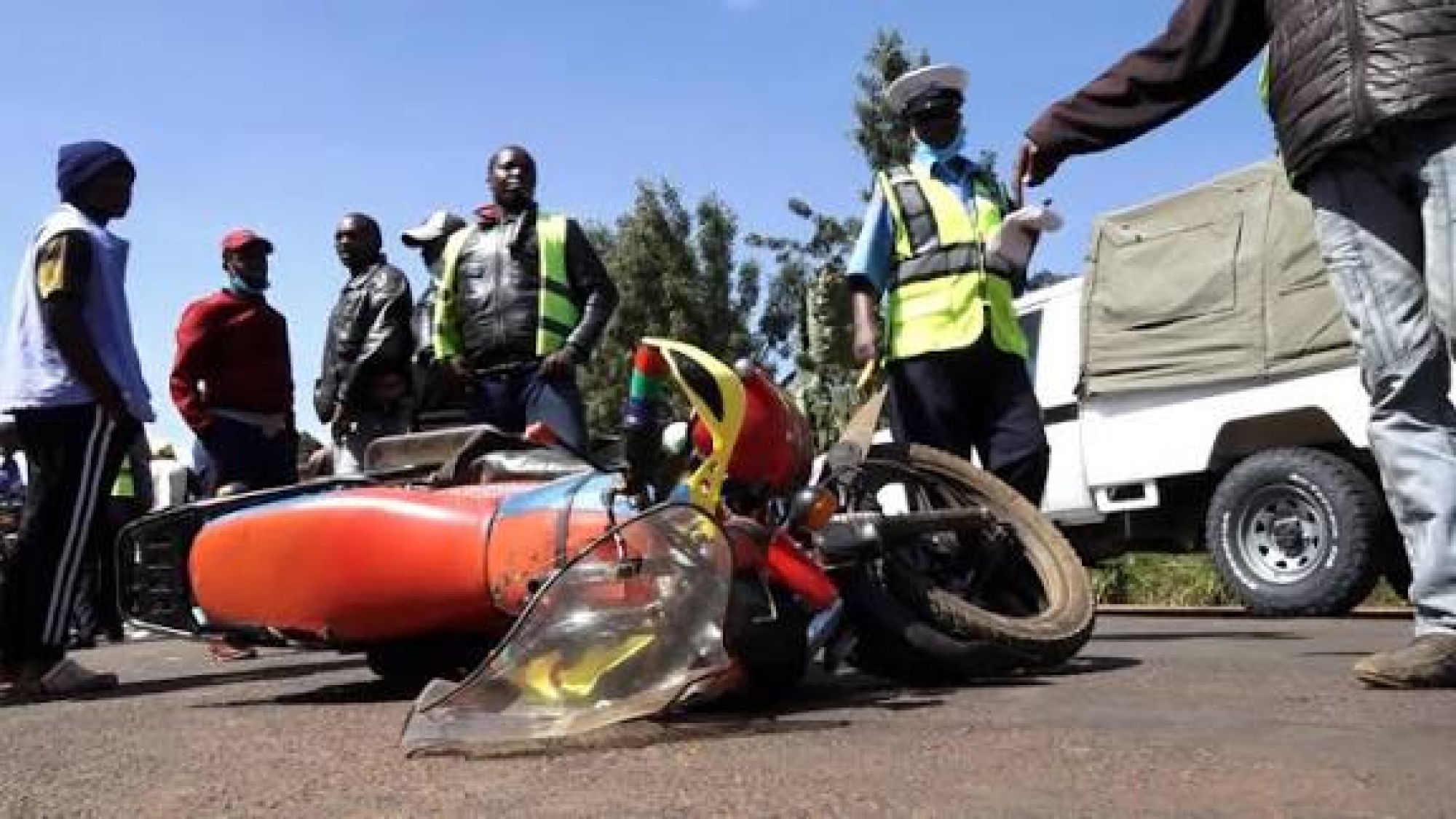
A rider’s helmet protects his head. Nothing protects his life.
There is a particular kind of grief that has become routine in Kenya’s boda boda stages. It arrives as a voice note shared in a WhatsApp group. A rider hasn’t come home. His phone is off. By morning, there is a body, sometimes in a thicket, sometimes in a coffee plantation, sometimes outside a shop with the shutters still down. The motorcycle, more often than not, is gone.
This is not a string of unfortunate coincidences. It is a pattern, and it is getting worse.
Kangemi, August 22, 2026
On the afternoon of August 22, 2026, word spread through Nairobi’s boda boda fraternity of yet another rider killed in Kangemi, his motorcycle stolen from the scene. Riders’ associations who broke the news online did not mince words. They called it heartbreaking. They called it a pattern. They pointed out, with real anguish, that this killing came barely six weeks after the notorious Kawangware 48 incident, and not even four months after another rider was found dead in a coffee plantation nearby, a killing that matches the case of a Kangemi based rider whose body was discovered with gunshot wounds in the Loresho coffee plantation earlier this year, his bike left lying beside him.
The community’s demand to the National Police Service and the Directorate of Criminal Investigations was blunt: investigate immediately, report back on the older cases, and stop letting these files go cold while riders bury their colleagues every few months. It is a demand that, on the evidence of this year alone, is entirely justified.
Is the sector under siege?
Boda boda transport is the backbone of everyday mobility in Kenya. Well over a million riders, by some estimates closer to two million once informal operators are counted, earn a living ferrying passengers, parcels and produce through towns with no functioning public transit of their own. It is punishing, low margin work, often done at night, often alone, often for strangers. That vulnerability has made riders an easy target.
The killings recorded this year alone paint a grim map of the country. In Riruta, a 35 year old rider named Selvin Omete was found outside a shop with fatal head injuries. In Isiolo, a rider known to his friends as Tosh vanished after picking up two passengers; only his bones were later recovered near a local school. In Loresho, a Kangemi based rider was shot four times and left beside his own motorcycle. In Nakuru, riders’ leaders have spoken of a cartel responsible for more than twenty killings and the theft of roughly seventy five motorcycles in a single five month stretch, with stolen bikes reportedly funnelled out of the county to unsuspecting buyers.
The script rarely changes. A rider is hired, often late at night, often by a stranger who insists on an out of the way destination. He is ambushed, robbed, and in a disturbing number of cases, killed, because a dead rider cannot identify his attackers, and a stolen motorcycle is worth far more than the cash in a man’s pocket.
When justice turns into a mob.
Fear this constant produces its own, darker response. Kenya’s boda boda sector has become entangled in a vicious cycle of mob violence, both as victim and as perpetrator.
Riders themselves have died at the hands of mobs. In February 2026, a rider was lynched by a crowd near a political rally in Vihiga County after a chaotic altercation, an incident the Directorate of Criminal Investigations described as a stark warning about armed, volatile gatherings. In Nairobi, two men accused of stealing a motorcycle were beaten by a crowd this July and later died of their injuries in hospital, a killing that itself triggered further unrest, with riders massing at the hospital demanding answers and, days later, clashing with police who had to disperse a crowd of hundreds.
At the same time, riders have carried out brutal reprisals of their own after colleagues are attacked, robbed or killed, torching vehicles, assaulting suspects, occasionally killing them outright, sometimes based on nothing more than a shout of “thief” in a crowded street. Courts have handed down decades long sentences to those convicted in these lynchings, yet the pattern repeats itself every few months in a different town. Transport sector stakeholders have publicly condemned this vigilantism, and rightly so, but condemnation alone does not address why riders feel that mob justice is their only recourse. When people do not trust that police will investigate an attack on one of their own, they take the matter into their own hands. That is not an excuse for lynching. It is a diagnosis of a system that has lost the community’s confidence.
The app trap: how “customers” become predators
Perhaps the most alarming and least discussed thread in this crisis is how criminals are now using ride hailing technology itself as bait.
Detectives investigating a gang operating out of Nairobi’s Kayole area uncovered a chillingly consistent method: suspects would book rides through a ride hailing app, typically requesting a trip from the central business district to a secluded, poorly served part of the estate. Riders who accepted the booking, trusting that a verified app account meant a verified customer, were ambushed by armed accomplices waiting at the drop off point, robbed of their phones, cash, mobile money and, frequently, their motorcycles. The consistency of the pattern convinced investigators they were dealing with an organised, repeat operation rather than opportunistic crime.
This should alarm every ride hailing platform operating in Kenya. An app account is only as trustworthy as the identity behind it, and right now, that bar is far too low. A criminal can register with minimal verification, request a ride under a false or borrowed profile, direct a rider into an ambush, and simply open a new account, or use a new number, the next time. The platforms that profit from every trip riders complete owe those riders more than a rating system.
What needs to change:
- Real identity verification at sign up, tied to a national ID and a live selfie match, not just a phone number that can be swapped out after one flagged trip.
- Pattern detection systems that flag accounts with unusual behaviour, new accounts requesting long trips to isolated addresses, repeated last minute destination changes, or multiple cancelled and rebooked rides to the same drop point, the exact fingerprints investigators found in the Kayole case.
- Mandatory trip sharing and panic buttons that are easy to trigger mid ride and that alert both a trusted contact and a rapid response desk, not just a customer service chatbot.
- Geofencing of known danger spots, with in app warnings or a required check in when a trip is routed into an area already linked to attacks on riders.
- A direct data sharing channel with the DCI’s cybercrime and serious crime units, so that a phone number or account linked to one attack can be cross referenced the moment it resurfaces on another platform, rather than each company treating its complaints as isolated incidents.
- A shared, industry wide blacklist between competing platforms, because a predator banned from one app should not simply migrate to the next.
None of this is technically difficult. It requires only that platforms treat rider safety with the same urgency they apply to fraud on the payment side of their business.
A police force that has stopped answering
Underneath every one of these categories sits the same corrosive problem: investigations that start with a press statement and then go silent.
Families of riders killed months ago say they have received no meaningful update on their cases. Boda boda associations have had to publicly demand progress reports on killings from earlier in the year simply to know whether anyone is still working the file. This is not an isolated complaint. A report from the Independent Medico Legal Unit found that police killed 97 people in a single year, a number that has fuelled a broader, painful conversation about accountability inside the force itself, a conversation sharpened further by cases such as that of a young rider who died within hours of being booked into a Nairobi police post, a death his family insists does not match the official account, and by the earlier, widely covered death of blogger Albert Ojwang in similar circumstances. When the institution meant to investigate violence against citizens is itself under investigation for violence against citizens, public confidence collapses on both fronts at once.
Riders do not need sympathy statements after every funeral. They need detectives assigned, suspects named, court dates set, and families told, plainly and regularly, what stage a case has reached. The absence of that basic communication is itself a form of harm. It tells a grieving family, and an entire profession, that their loved one’s death was not important enough to finish investigating.
What accountability should actually look like:
The demands raised by boda boda associations after the Kangemi killing on August 22 are not radical. They are the minimum any citizen should expect: a thorough, resourced investigation into a killing that just happened, and honest answers on the killings that came before it. Multiply that demand across every stage in the country, and it becomes a blueprint for what a functioning response to this crisis would require:
- Dedicated units within county police commands specifically tracking rider killings and motorcycle theft, so cases are not scattered across desks and forgotten.
- A public, regularly updated case tracker, even a simple one, that boda boda saccos and families can check, rather than relying on word of mouth or press statements.
- Fast tracked prosecutions for motorcycle theft rings, since recovered evidence shows these are frequently organised, repeat operations rather than one off crimes.
- Formal engagement between the National Police Service, the DCI, IPOA and boda boda umbrella associations, so that the community’s demand for updates has an actual, scheduled channel rather than a social media post shouted into the void.
- Independent, timely investigation of every death in police custody, so that trust between riders and the police, badly frayed already, has a chance of being rebuilt rather than eroded further.
The Digital Boda Drivers and Deliveries Association of Kenya speaks
The Digital Boda Drivers and Deliveries Association of Kenya (DBDDAK), the national body representing riders and delivery drivers working through app based platforms, has added its voice to these demands. The association is calling for speedy, transparent and institutionally willing action, particularly from law enforcement, to finally bring justice on these cases, and for concrete measures to be put in place to counter these vices, from motorcycle theft rings to app enabled ambushes to mob violence.
“We stand strong in advocating for the rights and welfare of our members, and of every other rider in Kenya,” the association affirms through its president Mr. Calvince Okumu. That commitment cannot rest on riders and their associations alone. It requires the National Police Service and the DCI to treat every open case with the seriousness it deserves, and it requires ride hailing platforms to close the loopholes that let predators pose as customers. Anything less leaves Kenya’s riders exactly where they have been for too long, carrying the whole weight of their own protection.
The bottom line
A boda boda rider who leaves home in the morning is not asking for much. He is asking to make an honest day’s wage and come back to his family that evening. Right now, Kenya cannot guarantee him that. He can be lured by a fraudulent app booking, ambushed for a motorcycle he is still paying off in loan instalments, caught in a mob’s fury after an accident that was never his fault, or left to die in a cell with no one held to account.
The riders’ fraternity said it plainly after Kangemi: they cannot keep issuing condolences every few months while investigations go silent. Neither, frankly, can the rest of the country. Every stolen motorcycle, every unsolved killing, every lynching and every unanswered call to a police station is a small verdict on how much a working man’s life is worth here. It is long past time that verdict changed.
Sources:
Two suspects lynched over motorcycle theft in Nairobi, The Star: https://www.the-star.co.ke/news/2026-07-05-two-suspects-lynched-over-motorcycle-theft From lynching to life sentences, Kenya’s losing battle against boda boda violence, Daily Nation: https://nation.africa/kenya/news/from-lynching-to-life-sentences-kenya-s-losing-battle-against-boda-boda-violence-5251708 Inside police crackdown on notorious Kayole robbers preying on boda riders, The Star: https://www.the-star.co.ke/counties/nairobi/2025-06-13-inside-police-crackdown-on-notorious-kayole-robbers-preying-on-boda-ridersBoda Boda rider shot dead in Loresho coffee plantation, Kahawatungu: https://kahawatungu.com/boda-boda-rider-shot-dead-in-loresho-coffee-plantation/Bodaboda rider found murdered outside shop in Nairobi’s Riruta, Kahawatungu: https://kahawatungu.com/bodaboda-rider-found-murdered-outside-shop-in-nairobis-riruta/Missing boda boda rider found murdered, Kenyan Post: https://www.kenyan-post.com/2026/05/missing-boda-boda-rider-found-murdered.html23-Year-old Man Dies 4 Hours After Arrest, Detention at Kawangware Police Post, Kenyans.co.ke: https://www.kenyans.co.ke/news/119052-man-dies-4-hours-after-arrest-detention-kawangware-police-stationKenya: Transport Sector Condemns Mob Justice By Boda Boda Riders, allAfrica: https://allafrica.com/stories/202601290062.html
Add a Comment